
On this page
Low-content book niches include recipe journals, gratitude journals, travel journals, workout logs and planners for a specific audience. Choose a book that solves a clear task, then check competing books and reader reviews before making the interior.
KDP defines low-content books as books with repetitive pages that the buyer fills in. Amazon’s classification guide says coloring, puzzle and children’s books are generally outside that category. This list includes related activity-book ideas, so check your actual interior before selecting the low-content setting in KDP.
How to check a book niche before publishing
- Choose an audience and a task, such as a recipe journal for family recipes or a workout log for strength training.
- Search Amazon for that exact idea. Compare interiors, prices and reader complaints, rather than relying on the number of search results alone.
- Compare Best Sellers Rank within the same category. One rank does not tell you a book’s exact sales.
- Check print costs and royalties before choosing a price. A KDP royalty calculator shows both for your page count. A niche idea is not evidence of profit.
1. Adult Coloring Books
KDP generally treats coloring books as activity books, rather than low-content books. They need original illustrations instead of repeated blank pages.
Choose a clear subject and difficulty level. Botanical drawings for beginners and detailed architectural scenes serve different buyers. Read competing books’ reviews for complaints about line thickness, detail and page layout before making your own interior.
Order a print proof to check how the artwork reproduces on paper. Verify the publishing category and ISBN requirements for your actual book.
2. Planners and Organizers

In the world of low-content books, planners and organizers stand out as essential tools. They help anyone looking to manage their time and boost productivity. These types of books cater to the universal need for time management and organization.
People need these skills in their personal and professional lives. As you dive into creating low and medium-content books on platforms like Amazon KDP, understanding the significance of planners and organizers can set you up for success.
Planners’ beauty lies in their ability to make users feel more in control of hectic schedules. This ultimately leads to less stress and more efficient use of time. However, one common mistake to avoid when designing these low-content books is creating overly rigid layouts.
Such inflexibility can deter users who prefer a bit of personalization in their planning tools.
To make your planners stand out, include customizable sections. They can adapt to various planning styles. This not only caters to a wider target audience but also adds a unique selling point to your low-content book.
For example, a planner might feature a mix of monthly, weekly, and daily spreads. It might also have blank pages for notes or doodles.
This versatility appeals to a broad audience. It includes the busy mom tracking family appointments and grocery lists. It also includes the entrepreneur jotting down business goals.
An effective planner is more than just a calendar. It is a tool for lifestyle optimization. Prioritizing user experience and flexibility in your book’s interior pages can significantly enhance its value.
When it comes to selling low-content books like Planners on platforms such as Amazon KDP, don’t underestimate the power of an eye-catching cover design.
Your book covers are the first thing potential buyers see. Investing in quality design can help your planners stand out in the search results.
By focusing on these key aspects, you are well on your way to creating and publishing low-content books that not only sell but genuinely help people organize their lives better.
3. Recipe Journals

If you’re exploring low-content books, recipe journals represent a fascinating niche. They tap into the universal love for cooking and the preservation of culinary heritage. With59% of millenials preferring to cook at home rather than eat out, the demand for these journals is more relevant than ever.
These journals aren’t just about writing down recipes. They’re an invitation to document culinary experiments, family traditions, and personal achievements in the kitchen.
They serve as a bridge connecting generations through the shared experience of cooking. You can design your recipe journal through platforms like Amazon KDP. It can be a creative outlet and a profitable endeavor.
When creating low-content books such as recipe journals, remember to make them user-friendly. A common mistake is not providing enough space for notes or adaptations.
This is crucial for home chefs who love tweaking recipes. Include sections for modifications, potential pairings, and personal anecdotes. This will elevate the journal’s value. It becomes not just a book but a canvas for culinary creativity and heritage.
Cover design is critical in capturing attention amidst the sea of KDP books. Your journal should stand out in search results. It should have an eye-catching, appetizing design that calls out to the food lover’s soul.
- Think about your target audience—what kind of dishes do they love?
- What’s their aesthetic?
Answer these questions to help you create a journal that resonates with them.
Imagine a family compiling decades of recipes into one beautiful hardcover or paperback. This journal then becomes a cherished heirloom, passed down through generations, preserving the legacy of home-cooked meals.
Such real-life stories underscore the importance and potential of recipe journals in the low content book market.
Keywords play a significant role in making your journal discoverable.
Use relevant terms like “recipe journal,” “family recipes,” and “culinary heritage” both in your title and description. You’ll reach those who are actively searching for a medium to consolidate their culinary journey.
In essence, venturing into the niche of recipe journals requires an understanding of your target audience’s needs. It also requires a flair for design. It’s a chance to tap into a market that celebrates creativity, tradition, and the simple joy of cooking.
4. Gratitude Journals

In the thriving market of low-content books, gratitude journals stand out as both a meaningful and profitable niche. These journals are a simple but profound tool. Gratitude journals are for those who want to cultivate a more positive outlook on life.
They’re not just about writing down what you’re thankful for. They’re about transforming your mindset. You acknowledge the good that surrounds you every day.
Unlike traditional journals, gratitude journals emphasize reflection over structure. The key is to encourage users to express themselves freely. Without the confines of too rigid an entry format.
As creators of these low-content books, you should aim to design interior pages that inspire reflection. Leave enough space for personal touches.
Think of prompts that nudge the writer to explore their feelings of gratitude. These prompts should not box the writer into a specific way of expressing gratitude.
Publishing gratitude journals on platforms like Amazon KDP can tap into a growing demand for wellness and positivity resources. The cover design is your first contact with your target audience; it needs to speak of warmth, positivity, and personal growth.
Use keywords rich in relevance like “gratitude,” “thankfulness,” and “daily reflection.” Also, use words that connect to a potential buyer’s deeper aspirations, such as happiness, mental health, and well-being.
**Remember, your goal is to create low-content books that aren’t just sold. You want them to be used, cherished, and recommended. **To that end, make your gratitude journals customizable and personal.
Offer variations in cover designs. Offer variations in interior page layouts to cater to different preferences. It’s not just about getting your journals published. It’s about creating something that becomes an integral part of someone’s daily routine.
Engaging with your audience doesn’t end once the sales roll in. Stay active in communities related to gratitude, positivity, and journaling.
Share useful content that complements the use of gratitude journals. This could be blog posts or videos.
They would discuss the benefits of maintaining a gratitude practice. Such engagement helps sell low-content books. It also builds a loyal customer base that looks forward to what you publish next.
5. Travel Journals

In the realm of low content books, travel journals are a captivating niche. They tie perfectly with the act of exploring new horizons. As an aspiring publisher on platforms like Amazon KDP, you’ve got a unique opportunity.
You can cater to a passionate demographic. Experience-driven spending is on the rise. Especially among millennials, statistics show theyprefer experiences over physical items over 60% of the time. A well-crafted travel journal can become a sought-after companion for adventurers and globe-trotters.
Creating your very own book a low content book, particularly a travel journal, involves integrating elements. These elements enrich the traveler’s journey.
Travel journals are different from traditional journals. They offer space for writing and preserving mementos from travels. These include ticket stubs, photos, and even the odd leaf or flower found in a book’s nook.
The key benefit here is the creation of a deeply personal account of travels. This amplifies the memories and stories garnered along the way.
However, ensure your travel journal stands out. Avoid one common mistake: repetitive content. Journals filled with generic prompts may not resonate with the target audience. Instead, infuse your interior pages with unique sections.
Invite users to engage in thoughtful reflection. They can sketch their surroundings, write, or jot down local recipes and anecdotes. This personal touch elevates the user’s experience. It aligns perfectly with the desires of those seeking to immortalize their journeys in a meaningful way.
Furthermore, don’t underestimate the power of a compelling cover design. Since the cover is the first thing a potential buyer sees, make sure it reflects the essence of adventure and exploration. Employ graphic designers if needed, ensuring the cover strikes a chord with your target audience.
You can take inspiration from real-life travel enthusiasts. They document their trips with a mixture of sketches, narratives, and collected memorabilia.
By doing this, you can create a travel journal that serves more than just a notebook. It becomes a treasure chest of personal history and exploration.
**Remember, the goal is to transform travel memories into a tangible narrative. **Travelers should be excited to fill, share, and look back on it for years to come.
By following these tips and keeping the focus on quality and relevance, you’re well on your way to creating a travel journal. It not only sells but also becomes an irreplaceable part of someone’s travel kit.
6. Fitness and Workout Logs
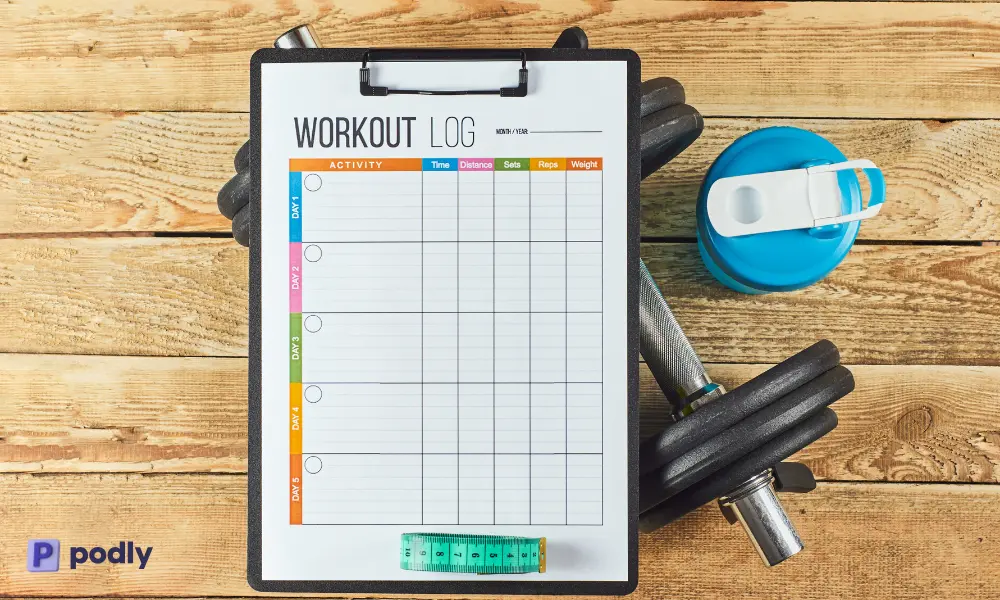
When you’re dedicated to a healthy lifestyle, Fitness and Workout Logs are your best companion. They come in the form of low content books.
Thanks to platforms like Kindle Direct Publishing (KDP), you can create or find these valuable tools. They are tailored for** tracking your fitness journey.** With society’s increasing focus on health and fitness, these logs serve an essential purpose.
The key benefit of a fitness log is its ability to help you set tangible fitness goals. You can also track your day-to-day progress and keep your motivation levels high.
A well-designed log can make all the difference. It can help you improve your running time, increase your strength, or simply stay consistent with your workouts.
However, a common mistake to avoid is overcomplicating these logs. Including too many details can make the log overwhelming and discourage users. Instead, opt for simple, user-friendly layouts that focus on essential workout metrics.
This approach ensures that the fitness log remains accessible and easy to use. It encourages regular entries and reflections on progress.
Take, for example, the fitness enthusiast who diligently tracks their weekly achievements. By noting improvements in specific areas such as running times and strength training, they can see where they’ve succeeded.
They can also see where there’s room for growth. This real-life application underscores the effectiveness of fitness and workout logs.
Remember, your fitness log is more than just a collection of numbers. It’s a reflection of your journey, a celebration of your progress, and a tool to foster a consistent fitness routine.
When publishing these logs through platforms like Amazon KDP, prioritize cover design and keywords. Catch your target audience’s eye.
Choose relevant keywords, like “fitness logs” or “workout journals.” Invest in an attractive cover to improve the chances of discovery by those starting or continuing their fitness journey.
Fitness and workout logs exemplify the power of low-content books. They provide a simple yet effective way for individuals to stay on track with their health and fitness goals.
Whether you’re creating these logs to publish on Amazon or using them for your journey, the emphasis should always be on progress, motivation, and simplicity.
7. Children’s Activity Books
KDP generally classifies activity books separately from low-content journals and logs. Choose the publishing settings that match the actual interior.
Define an age range and a task before creating pages. A travel activity book for early readers needs different instructions and difficulty from a puzzle collection for older children.
Make original activities, check that puzzles have correct answers, and test whether the instructions make sense to the intended reader. An activity book needs editorial work even when each page has little text.
8. Language Learning Journals

As you dive into the world of Amazon KDP, explore profitable niches within low-content books. Don’t overlook the potential of Language Learning Journals. These unique journals are essential tools for countless individuals.
They are embarking on the adventure of mastering a new language. They stand out. They’re not just about writing down words and phrases; they’re about enhancing the journey of language acquisition.
Language Learning Journals are designed to cater to the ever-growing community of language learners and polyglots. The key benefits of these journals are profound.
They not only aid in enhancing language retention but also play a crucial role in tracking progress and personalizing the learning experience. When creating low-content books, ensure the interior pages allow plenty of space for personal reflections and real-world practice.
This is where many creators fall short. Ensure your journal includes sections for daily interactions, new vocabulary, and cultural notes. Make it a true companion in linguistic mastery.
Consider the example of a student learning Spanish. By using a language learning journal, the learner records daily conversations. They note new expressions and reflect on cultural insights. This significantly accelerates their path to fluency.
This real-life application shows the practicality and necessity of these journals in the language learning process.
When publishing low-content books like language learning journals on Amazon KDP, focus on cover design. Use relevant keywords to stand out in search results. Your target audience is looking for a journal that is not just useful but visually appealing, drawing them in at first glance.
In your journey to self-publish your low-content books on Amazon, consider language learning journals as more than just notebooks.
They are indispensable tools for anyone eager to learn a new language. With the right design, content, and marketing strategy, these journals can be a lucrative niche. They’re part of the vast ocean of low-content publishing.
9. Mindfulness and Meditation Logs

In the ever-expanding world of Amazon Kindle Direct Publishing (KDP), low-content books are carving out a significant niche. They cater to a variety of interests. Among these, mindfulness and meditation logs are gaining prominence.
They’re not just books. They’re tools for personal growth and mental wellness. They align perfectly with the global shift towards mindfulness and self-care.
Did you know practicing mindfulness can reduce stress levels by up to 40%? This statistic highlights the efficacy of mindfulness in our increasingly hectic lives. You can add mindfulness and meditation logs to your collection of low-content books.
This could help your target audience find value. It could also position your publications as essential resources for their self-care journey.
When creating these low-content books, it’s crucial to design interior pages. The pages should encourage users to reflect deeply on their experiences. Incorporate open-ended prompts and spacious layouts.
This will make your journal more inviting and less restrictive. Remember, a common mistake to avoid is making the log too prescriptive. Everyone’s mindfulness journey is unique, and your book should allow the space for personal exploration.
A real-life example that resonates with many is noting down daily meditation experiences. People who do this often observe a significant decrease in stress and anxiety over time. This personal growth and development are what readers are looking for when they purchase mindfulness logs.
For the cover design, think about visuals that evoke tranquility and peace. Sales significantly depend on how your book stands out in search results. A visually appealing cover could be just what’s needed to catch a potential buyer’s eye on Amazon.
Additionally, using keywords related to mindfulness and meditation in your book title and description can boost your visibility on Amazon’s KDP. Remember, it’s not just about listing; it’s about making your book easy to find for those who need it.
Creating and publishing low-content books like mindfulness and meditation logs on platforms like Amazon KDP can be both fulfilling and profitable.
Focus on quality content that aids mental well-being. Align your marketing strategies to highlight these benefits. You’re not just selling a book; you’re providing a valuable tool for personal transformation.
10. Dream Journals

Diving into the world of Amazon low content books opens up a realm of possibilities for you. You are an aspiring entrepreneur.
By focusing on niches like journals planners activity books and more you’re not just creating books. You’re crafting tools for creativity learning and personal growth. Remember, the key to success lies in balancing design complexity with customizable sections.
Ensure your cover design and keywords are on point to attract your target audience. Your books have the potential to add significant value. They can help someone plan their day, stimulate a child’s creativity, or support someone’s journey to mindfulness.
Take the insights and tips shared here. Start your journey creating low-content books.
They should sell and make a difference in people’s lives. The opportunity to generate passive income is right at your fingertips. By contributing positively to the world of publishing, you can seize it.
Frequently Asked Questions
What are low-content books?
Low-content books have repetitive interior pages that readers fill in, such as journals, planners and logs. KDP generally classifies coloring, puzzle and other activity books separately.
They still need a usable interior, an accurate cover and a print proof. Publishing a book does not guarantee sales.
Why are low-content books a good passive income stream?
Low-content books offer an accessible entry into publishing for aspiring entrepreneurs. They don’t need extensive literary skills.
They are low-content publishers that can generate significant income with minimal upfront effort. They appeal to a wide audience seeking journals, planners, and educational tools.
What types of low-content books are popular?
Low-content formats include journals, planners, fitness logs and other repetitive pages that readers fill in. Activity books are a related format, but KDP generally classifies them separately.
Each type caters to specific interests and needs, providing value to various target audiences.
How can I make my low content book stand out?
To make your book stand out, focus on striking design, customizable sections, and a captivating cover.
Use relevant keywords in your title and description to enhance visibility and appeal directly to your target audience.
Why are children’s activity books profitable?
Children’s activity books combine entertainment with learning. Profit depends on buyer demand, print costs, pricing and how well the activities fit the intended age group.
These books serve as tools for development, creativity, and cognitive enhancement. They appeal to parents and educators seeking quality educational materials.
How can I create a successful mindfulness and meditation log?
For a successful mindfulness and meditation log, design interior pages that encourage reflection and personal exploration.
Use visually appealing covers and ads that leverage keywords related to mindfulness and personal growth. Focusing on content that aids mental well-being can attract a dedicated audience.