
Your Amazon Merch listing lives or dies by its keywords. A great design with poor keywords sits at the bottom of search results, invisible to buyers. The same design with the right keywords shows up when shoppers are ready to buy.
This guide covers everything you need to know about finding and using Amazon Merch keywords — from the types of keywords that drive sales, to research methods, to a ready-to-use list of proven keyword categories for t-shirts and other products.
What Are Amazon Merch Keywords and Why Do They Matter?
Amazon Merch keywords are the words and phrases you add to your product title, brand name, bullet points, and description. Amazon’s A9 search algorithm uses these keywords to decide which products appear when a shopper searches.
Here’s what makes keywords critical for Merch by Amazon sellers:
- Visibility: Your product only appears in searches that match your keywords. No keyword match means no impressions.
- Relevance: Amazon rewards listings where keywords closely match what the buyer searched. Higher relevance means higher placement.
- Conversion: The right keywords attract buyers with purchase intent, not just browsers. This directly impacts your Merch by Amazon royalties.
The difference between a listing that sells and one that doesn’t often comes down to keyword selection — not design quality.
Types of Keywords for Merch by Amazon
Not all keywords work the same way. Understanding the different types helps you build a complete keyword strategy.
Long-Tail Keywords
Long-tail keywords are phrases with three or more words that target specific search intent. They have lower search volume individually but much higher conversion rates because they match exactly what the buyer wants.
Instead of: “funny t-shirt” Use: “funny retirement gift t-shirt for men”
The second keyword has less competition and speaks directly to a buyer who knows what they want. Long-tail keywords are where newer sellers can compete against established accounts.
Niche Keywords
These target specific interests, hobbies, professions, or communities. Niche keywords work because they connect with passionate audiences willing to spend on products that represent their identity.
Examples by category:
- Professions: “respiratory therapist appreciation shirt”, “dog groomer funny tee”
- Hobbies: “disc golf player gift shirt”, “sourdough bread baker tee”
- Communities: “homeschool mom life shirt”, “plant dad funny tshirt”
Niche keywords consistently outperform broad terms on Merch by Amazon because competition is lower and buyer intent is higher.
Seasonal and Event Keywords
These keywords surge during specific times of the year. Planning your seasonal keyword strategy 4-6 weeks before peak periods gives your listings time to index and gain traction.
High-volume seasonal windows:
- Q4 (October-December): Christmas, Halloween, Thanksgiving — the biggest sales period for merch
- Q1 (January-March): Valentine’s Day, St. Patrick’s Day, spring break
- Q2 (April-June): Mother’s Day, Father’s Day, graduation, summer themes
- Q3 (July-September): Back to school, Labor Day, fall themes
A keyword like “dad jokes christmas sweater” may have zero volume in July but spikes significantly in November.
Buyer Intent Keywords
These signal that the shopper is ready to buy, not just browsing. Adding intent modifiers to your keywords attracts higher-converting traffic.
Common buyer intent modifiers:
- “gift for”, “birthday gift”, “christmas present”
- “matching”, “couples”, “family”
- “custom”, “personalized”
- “funny”, “cute”, “vintage”, “retro”
Combining intent modifiers with niche keywords creates powerful long-tail phrases: “funny fishing gift for husband birthday” targets a buyer with wallet in hand.
How to Find Amazon Merch Keywords
Method 1: Amazon Search Autocomplete
Start typing a seed keyword into the Amazon search bar and note what Amazon suggests. These suggestions are based on actual shopper searches, making them high-value keyword ideas.
Try patterns like:
- “[niche] shirt”
- “[niche] gift for”
- “funny [profession] shirt”
- “[hobby] t-shirt”
Method 2: Analyze Top-Selling Listings
Find the best-selling products in your niche and study their titles, bullet points, and descriptions. Look for patterns in how they structure their keywords.
Pay attention to:
- Which keywords appear in the title (highest weight for Amazon’s algorithm)
- How they order keywords by importance
- What related keywords they include in bullet points
Method 3: Use a Merch Research Tool
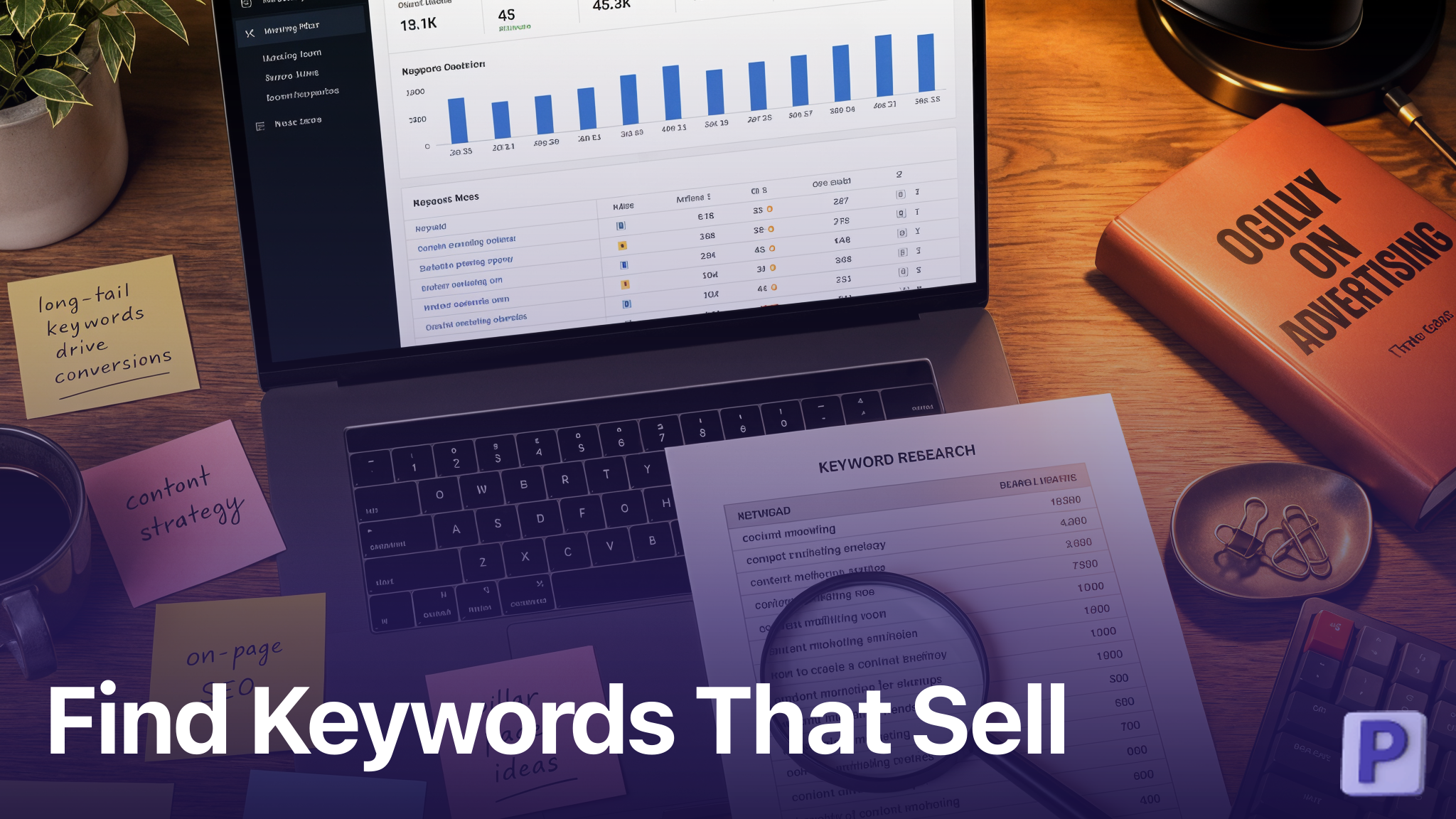
Manual research has limits. A dedicated Merch research tool gives you data-backed keyword suggestions with search volume, competition metrics, and trending indicators.
Podly’s keyword processor analyzes search data across Merch by Amazon to surface keywords that are gaining traction in your niche. Instead of guessing which keywords work, you see actual performance data.
Key features to look for in a keyword tool:
- Search volume estimates: How often a keyword is searched
- Competition level: How many listings already target this keyword
- Trend data: Whether a keyword is growing or declining
- Related keyword suggestions: Expanding your keyword list from seed terms
Method 4: Use Google Trends for Timing
Google Trends shows you when interest in a topic peaks. While Amazon search data is best for volume, Google Trends helps you time your seasonal listings and spot emerging trends before they hit Amazon.
Search for your niche keywords on Google Trends and look for:
- Seasonal patterns that repeat yearly
- Sudden spikes that indicate viral or cultural moments
- Gradually rising interest that signals an emerging niche
Top Keywords for Shirts: Categories That Sell
Below is a categorized list of keyword patterns that consistently perform on Amazon Merch. Use these as starting points and combine them with your specific niche.
Profession and Career Keywords
- [profession] funny shirt — e.g. “nurse funny shirt”
- [profession] appreciation gift — e.g. “teacher appreciation gift tshirt”
- [profession] retired — e.g. “retired firefighter shirt”
- [profession] mode on — e.g. “engineer mode on tee”
Healthcare, education, trades, and first responders consistently rank among the top keyword categories for shirts on Amazon.
Hobby and Interest Keywords
- [hobby] lover shirt — e.g. “book lover shirt”
- [hobby] life tee — e.g. “camping life tee”
- [hobby] is my therapy — e.g. “fishing is my therapy shirt”
- [hobby] vibes — e.g. “gardening vibes tshirt”
Family and Relationship Keywords
- best [relation] ever — e.g. “best grandpa ever shirt”
- [relation] of the year — e.g. “dad of the year tee”
- matching [group] shirts — e.g. “matching family vacation shirts”
- promoted to [relation] — e.g. “promoted to grandma shirt”
Family-related keywords have high volume year-round and spike around Mother’s Day, Father’s Day, and the holiday season.
Humor and Personality Keywords
- sarcastic [topic] — e.g. “sarcastic introvert shirt”
- I’d rather be [activity] — e.g. “I’d rather be fishing tee”
- [activity] and coffee — e.g. “hiking and coffee shirt”
- sorry I’m late — e.g. “sorry I’m late I was reading shirt”
Humor keywords convert well because buyers share them, generating organic word-of-mouth.
Trending and Cultural Keywords
Stay current with pop culture, memes, and social movements. These keywords can produce quick sales but have shorter shelf lives.
How to spot trends:
- Monitor social media for viral phrases and memes
- Track Amazon trending products in real time
- Use Podly’s trending search feature to see what’s gaining momentum
How to Optimize Your Amazon Merch Listing Keywords
Finding keywords is half the battle. Placing them correctly in your listing determines whether Amazon’s algorithm picks them up.
Title Optimization
Your title carries the most keyword weight. Structure it so the most important keywords come first.
Formula: [Primary Keyword] - [Secondary Keyword] [Audience/Modifier] [Product Type]
Example: “Funny Retirement Gift For Men - Retired and Loving It T-Shirt”
This title targets “funny retirement gift for men”, “retired and loving it”, and “retirement t-shirt” simultaneously.
Brand Name Field
Many sellers overlook this, but Amazon indexes the brand name field. Use it for an additional keyword that doesn’t fit naturally in the title.
Bullet Points and Description
Include keyword variations and related terms in your bullet points. Don’t repeat title keywords — use this space for secondary and long-tail variations that broaden your reach.
Things to include:
- Size and fit keywords (“unisex”, “slim fit”, “plus size”)
- Occasion keywords (“birthday”, “christmas”, “anniversary”)
- Style keywords (“vintage”, “retro”, “minimalist”, “graphic”)
Common Keyword Mistakes to Avoid
- Keyword stuffing: Cramming too many keywords makes your listing unreadable and can hurt conversion
- Ignoring search intent: Using keywords that attract browsers instead of buyers
- Copying competitor keywords verbatim: You need unique combinations to differentiate
- Neglecting updates: Keywords that worked six months ago may be oversaturated now
- Using trademarked terms: Always run a trademark check before using brand names, characters, or catchphrases
Building Your Keyword Strategy
A sustainable keyword strategy for Merch by Amazon involves three ongoing activities:
1. Research Before Every Design
Don’t design first and find keywords later. Start with keyword research to identify demand, then create designs that match what buyers are searching for.
2. Track What Works
Monitor your listings’ performance. When a product starts selling, note which keywords drove that sale and double down on similar keyword patterns for future designs.
3. Refresh Regularly
Review and update your keyword strategy monthly. Niches shift, new trends emerge, and competition changes. Sellers who refresh their keywords consistently outperform those who set and forget.
Use Podly’s listing optimizer to analyze your existing listings and identify keyword gaps — places where adding or swapping a keyword could improve your ranking.
Frequently Asked Questions
How many keywords should I use in my Amazon Merch listing?
Fill every available field — title, brand, bullet points, and description. Amazon gives you limited character space, so prioritize your highest-value keywords in the title and use supporting keywords in other fields. Aim for 8-12 unique keyword phrases across your entire listing.
What are the best free tools for finding merch keywords?
Amazon’s own search autocomplete is the best free starting point. Google Trends helps with seasonal timing. For deeper research, Podly offers a free tier that includes keyword suggestions and competition data for Merch by Amazon.
How do I know if a keyword is too competitive?
Check how many listings already use that exact keyword in their title. If the first page is dominated by listings with hundreds of reviews, the keyword is likely too competitive for a new listing. Focus on long-tail variations where you can rank faster.
Should I use the same keywords for different products?
Avoid targeting identical keywords across multiple listings — they’ll compete against each other (keyword cannibalization). Instead, use variations and related terms so each listing targets a unique search query cluster.
How often should I update my Merch by Amazon keywords?
Review your keywords at least monthly. Update underperforming listings immediately. For seasonal products, plan keyword changes 4-6 weeks before the seasonal peak to give Amazon time to index your updates.
What’s the difference between Amazon Merch keywords and regular Amazon SEO?
The principles are similar, but Merch by Amazon has fewer fields to work with compared to FBA product listings. You don’t have backend search terms, so every visible keyword placement counts more. Focus on the title as your primary keyword vehicle.